

Behind the Curtain: Wizard of Oz Studies in UX Design
Some of the most valuable UX research happens long before a product is fully built, or even built at all. Wizard of Oz studies are a great example of this kind of early exploration. In a Wizard of Oz (WoZ) study, users interact with what looks like a working system, but behind the scenes, a real human is quietly making it run. The name comes from The Wizard of Oz, where the all-powerful wizard turns out to be just a person pulling levers behind a curtain. In UX, that moment of revelation isn’t a trick, it’s the point.
How the Method Works in Practice
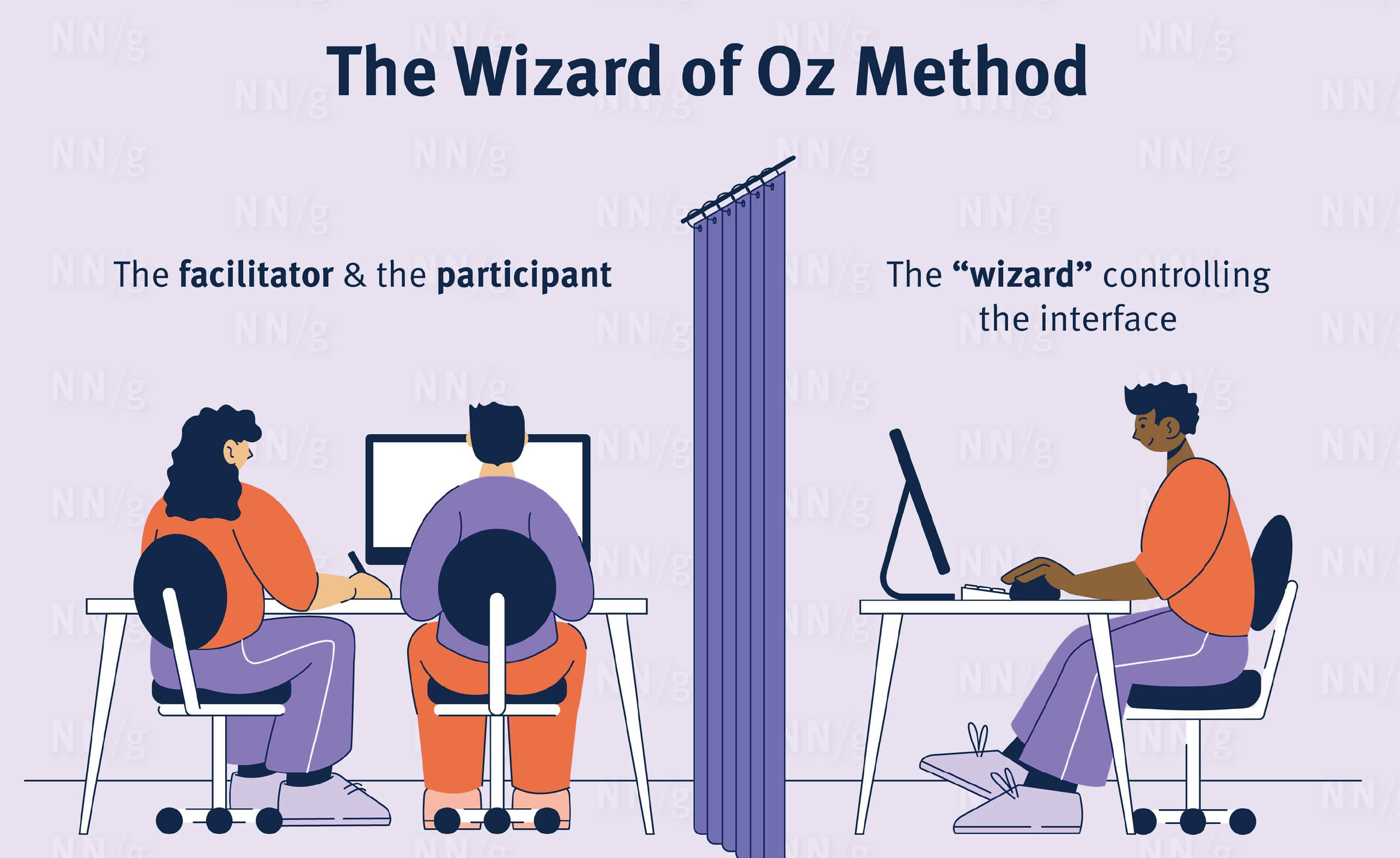
Wizard of Oz studies give designers a way to test ambitious ideas without needing advanced technology upfront. To users, the experience feels real. They might talk to a voice assistant, chat with what seems like an automated system, or click through a “smart” interface, not realizing that a human is actually powering the responses.
In practice, the process is pretty straightforward:
Decide what behavior you want to test. The team focuses on what the system should appear to do; answer questions, make recommendations, or guide users through a task.
Build a simple but believable interface. This doesn’t need to be polished. Wireframes, chat windows, or basic scripted responses usually do the trick.
Choose a “wizard.” One person runs the system quietly in the background, responding to user actions in real time.
Let users interact naturally. Participants use the product as if it were fully automated, completing tasks and exploring features.
Pay close attention. Researchers watch for confusion, hesitation, trust, or moments where things just click.
Reflect and refine. Afterward, the team reviews what worked, what didn’t, and how the concept should evolve.
The real advantage here is timing. Because nothing is fully built yet, changes are easier, cheaper, and far less risky.
Tools That Make WoZ Studies Possible
Wizard of Oz studies don’t rely on fancy technology. In fact, simpler tools often work better. Designers frequently use low-fidelity prototypes, clickable wireframes, shared documents, or basic chat interfaces. Tools like Figma, Zoom, or even paper screens are common. What matters most isn’t realism, it’s whether the experience feels believable enough for users to engage naturally. When it does, the insights can be surprisingly deep.
Why Designers Use Wizard of Oz Studies
There’s solid research behind this method. Early work by John F. Kelley showed that simulating intelligent behavior can reveal user expectations that are hard to uncover any other way. More recently, Nielsen Norman Group has pointed to Wizard of Oz studies as an especially effective approach for testing AI-driven and conversational interfaces before automation is ready.
This method has also played a major role in voice interface research. A study by Dahlbäck, Jönsson, and Ahrenberg found that users behave more naturally when they believe a system is autonomous, leading to more authentic insights around language, timing, and trust. Those lessons still influence how conversational experiences are designed today.
Designing Before the Tech Catches Up
What makes Wizard of Oz studies so valuable is their honesty. Instead of waiting for technology to catch up, or pretending it already has, designers focus on what users actually want and expect. By pulling back the curtain early, teams can design more thoughtful, human-centered experiences without waiting for the future to arrive first.
